

Republic of Estonia
Eesti Vabariik
Eesti Vabariik
Government type Parliamentary republic
Area 45,339 km² (17,505 sq mi)
Population 1,332,000 inh. (2021 census)
Population 1,363,000 inh. (2026 est.)
Population density 30 inh/km² (78 inh/mi²)
Area 45,339 km² (17,505 sq mi)
Population 1,332,000 inh. (2021 census)
Population 1,363,000 inh. (2026 est.)
Population density 30 inh/km² (78 inh/mi²)
Capital Tallinn (457,000 pop.)
Currency Euro
Human development index 0.905 (36th place)
Languages Estonian (official), Russian
Life expectancy M 75 years, F 83 years
Currency Euro
Human development index 0.905 (36th place)
Languages Estonian (official), Russian
Life expectancy M 75 years, F 83 years
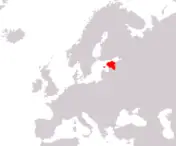
GEOGRAPHY DATA OF ESTONIA
Largest cities
Tallinn 457,000 pop.
Tartu 97,300 pop.
Narva 52,500 pop.
Highest mountains
Suur Munamägi 317 m (1,040 ft)
Longest rivers
Võhandu 162 km (101 mi)
Pärnu 144 km (89 mi)
Põltsamaa 135 km (84 mi)
Largest lakes
Peipsi Järv 3,555 km² (1,373 sq mi) total, including Russian section
Vortsjärv 271 km² (105 sq mi)
Largest islands
Saaremaa 2,671 km² (1,031 sq mi)
Hiiumaa 989 km² (382 sq mi)
Muhu 198 km² (76 sq mi)
Vormsi 93 km² (36 sq mi)
ADMINISTRATIVE DIVISIONS OF ESTONIA
Estonia is divided into 15 counties, that of Pärnu in the central-western part is the largest, while that of Harju, where the capital is located, hosts almost half of the population, in just under 10% of the territory.Only 14 inhabited centers exceed 10,000 inhabitants, not even one hundred thousand, if we exclude Tallinn; they are located either on the northern coastal strip on the Baltic Sea or in the central-southern part.